The clinic is the first in Nevada to offer in-state heart transplant services.
Category: Uncategorized
Few hospitals are promoting potentially predatory medical payment products
A recent USC study finds concerns about hospitals offering medical payment products may be overblown.
Residency classmates-turned-USC faculty achieve simultaneous funding success
The National Institutes of Health gave ophthalmologists Sun Young Lee and Benjamin Xu reason to celebrate.
2 USC faculty members named 2024 Guggenheim Fellows
Paul K. Newton, left, and Nicolás Lell Benavides have been named Guggenheim Fellows. (Photos/Vivian Sachs; Courtesy of the USC Viterbi School of Engineering)
University
2 USC faculty members named 2024 Guggenheim Fellows
Mathematician Paul Newton will use the prestigious fellowship to investigate cancer models; composer Nicolás Lell Benavides will complete several musical works.
USC faculty members Paul K. Newton and Nicolás Lell Benavides have been awarded prestigious Guggenheim Fellowships for 2024.
Newton, professor of aerospace and mechanical engineering and mathematics at the USC Viterbi School of Engineering, and Benavides, a lecturer at the USC Thornton School of Music, were chosen by the John Simon Guggenheim Memorial Foundation from nearly 3,000 applicants. They are among 188 inductees chosen this year for their excellence in scholarship and the arts.
“Humanity faces some profound existential challenges,” said Edward Hirsch, president of the foundation. “The Guggenheim Fellowship is a life-changing recognition. It’s a celebrated investment into the lives and careers of distinguished artists, scholars, scientists, writers and other cultural visionaries who are meeting these challenges head-on and generating new possibilities and pathways across the broader culture as they do so.”
USC Guggenheim Fellow Paul K. Newton: Modeling cancer evolutions models using game theory
Newton has been awarded a 2024 Guggenheim Fellowship for his pioneering work using game theory to study and develop cancer evolution models.
As an applied mathematician in USC Viterbi, Newton’s use of computational models to predict the ways that tumor cell populations organize, compete, evolve and disperse in their human hosts is recognized for its revolutionary potential to control and manage cancer progression at an early stage of the disease.
“While these topics have long been the focus of medical oncologists and molecular biologists, only recently have physical scientists and applied mathematicians begun to develop quantitative and predictive models that can shed light on some of the most pressing questions in this field,” Newton said.
During his fellowship, Newton will be visiting cancer centers across the United States to learn from different practitioners. “Working together, we can build more effective computer simulations of cancer progression based on mathematical models informed by longitudinal patient data,” Newton said. “I think that is the future of this field — groups of medical specialists making decisions partially informed by scientists and modelers who are providing simulations to predict what might happen under differing scenarios.”
As a leader in the field of computational oncology, Newton is distinguished for his creative and cross-disciplinary approach. The use of evolutionary game theory to understand tumor ecology arises from a paradigm that views the cancer cell and immune system dynamics of a tumor as a co-evolving population, with Darwinian selection at work. In predicting the processes of natural selection driven by cellular heterogeneity and clonal competition — especially as regards drug resistance — these models have the potential to inform more effective methods to steer the evolutionary dynamics of a tumor.
With the support of the Guggenheim Fellowship and collaboration with cancer centers across the United States, Newton is hopeful that cancer could eventually be treated as a manageable disease — much like diabetes — with monitoring and adaptive control of chemotherapy scheduling.
USC Guggenheim Fellow Nicolás Lell Benavides: Composing a tribute to family and perseverance
Composer Benavides, a USC Thornton alumnus and current faculty member, has been praised for ambitious, modern operas that bring characters to life and chamber music that features wide-ranging influences. He’ll spend the year completing an array of creative work.
“It’s humbling to be recognized by colleagues whose work I admire so much, and to join so many of my mentors at USC Thornton School of Music with this distinction,” Benavides said. “The legacy of achievement and artistry over 99 years of fellowships is breathtaking, and I’m so grateful to be part of the newest cohort.”
He joins a list of current composition faculty who have been honored with a Guggenheim Fellowship, including Donald Crockett, Andrew Norman and Nina C. Young. As a part-time lecturer, the award will allow Benavides to focus on his art. “I do not have the same sabbatical opportunities as many tenured faculty, and an award like this can allow me to take needed time away to focus on my most ambitious creative projects,” he said.
Benavides will use the Guggenheim Fellowship on numerous projects, including finishing the opera Dolores about labor organizer and civil rights icon Dolores Huerta, which is scheduled for a rolling premiere in 2025 with West Edge Opera, San Diego Opera, The BroadStage and Opera Southwest. Huerta and Benavides are cousins who were featured by USC in last year’s commencement coverage when both earned doctorates from the university.
He’ll also embark on a new chamber work for the Grammy Award-winning ensemble Eighth Blackbird in conjunction with the Barlow Endowment. Among his other projects are releasing an album that explores the culture, language and music of New Mexico called Canto Caló for Innova Recordings, finishing demos and finding a commissioner for the Latin jazz-inspired comic opera Caravana de mujeres. Additionally, he’ll work on a variety of soon-to-be-announced chamber works, including a large-scale piece about grief and loss for tenor, oboe and string quartet to premiere in Los Angeles in January 2025.
It’s a dizzying and enthralling output. The many compositions he’ll take on reflect a preference for finding inspiration in a diverse portfolio of work.
“The Guggenheim Fellowship will allow me to spend time experimenting with sounds and colors I usually wouldn’t have time to consider and tackle more projects than I normally would be able to do,” Benavides said.
About the Guggenheim Fellowship: Created in 1925 by U.S. Sen. Simon Guggenheim and his spouse, Olga Guggenheim, the John Simon Guggenheim Memorial Foundation offers fellowships to exceptional individuals in pursuit of scholarship in any field of knowledge and creation in any art form.
Applications for the fellowship undergo review by experts in each applicant’s field. Fewer than 200 Guggenheim Fellowships are then awarded to individuals who have demonstrated exceptional capacity for productive scholarship or exceptional creative ability in the arts.
Take it from the rats: A junk food diet can cause long-term damage to adolescent brains
Researchers wondered about the impact of a fat-filled, sugary Western diet during adolescence, when the brain is undergoing significant development. (Photo/iStock)
Health
Take it from the rats: A junk food diet can cause long-term damage to adolescent brains
Rats fed a diet full of fat and sugar in adolescence suffered memory impairment, USC researchers found. The study reinforces the important link between the gut and the brain.
A new USC-led study on rats that feasted on a high-fat, sugary diet raises the possibility that a junk food-filled diet in teens may disrupt their brains’ memory ability for a long time.
“What we see not just in this paper, but in some of our other recent work, is that if these rats grew up on this junk food diet, then they have these memory impairments that don’t go away,” said Scott Kanoski, a professor of biological sciences at the USC Dornsife College of Letters, Arts and Sciences. “If you just simply put them on a healthy diet, these effects unfortunately last well into adulthood.”
The study appears in the May issue of the journal Brain, Behavior, and Immunity.
In developing the study, Kanoski and lead author and postdoctoral research fellow Anna Hayes considered that prior research has shown a link between poor diet and Alzheimer’s disease. People who suffer from Alzheimer’s disease tend to have lower levels of a neurotransmitter called acetylcholine in the brain that is essential for memory and functions such as learning, attention, arousal and involuntary muscle movement.
The team wondered what this could mean for younger people who may be on a similar fat-filled, sugary Western diet, particularly during adolescence when their brain is undergoing significant development. By tracking the impact of the diet on the rats’ levels of acetylcholine and running the rats through some memory testing, they could learn more about the important relationship between diet and memory.
The researchers tracked the acetylcholine levels of a group of rats on a fatty, sugary diet and in a control group of rats by analyzing their brain responses to certain tasks designed to test their memory. The team examined the rats’ brains post-mortem for signs of disrupted acetylcholine levels.
The memory test involved letting the rats explore new objects in different locations. Days later, the researchers reintroduced the rats to the scene that was nearly identical except for the addition of one new object. Rats on the junk food diet showed signs they could not remember which object they had previously seen, and where, while those in the control group showed familiarity.
“Acetylcholine signaling is a mechanism to help them encode and remember those events, analogous to ‘episodic memory’ in humans that allows us to remember events from our past,” lead author Hayes explained. “That signal appears to not be happening in the animals that grew up eating the fatty, sugary diet.”
Kanoski emphasized that adolescence is a very sensitive period for the brain when important changes are occurring in development. “I don’t know how to say this without sounding like Cassandra and doom and gloom,” he said, “but unfortunately, some things that may be more easily reversible during adulthood are less reversible when they are occurring during childhood.”
There is at least some hope for intervention. Kanoski said that in another round of the study, the research team examined whether the memory damage in rats raised on the junk food diet could be reversed with medication that induces the release of acetylcholine. They used two drugs, PNU-282987 and carbachol, and found that with those treatments given directly to the hippocampus, a brain region that controls memory and is disrupted in Alzheimer’s disease, the rats’ memory ability was restored.
But without that special medical intervention, Kanoski said more research is needed to know how memory problems from a junk food diet during adolescence can be reversed.
In addition to Kanoski and Hayes, the team included other USC Dornsife researchers Logan Tierno Lauer, Alicia E. Kao, Molly E. Klug, Linda Tsan, Jessica J. Rea, Keshav S. Subramanian, Cindy Gu, Arun Ahuja, Kristen N. Donohue and Léa Décarie-Spain; Natalie Tanios of Keck School of Medicine of USC; as well as Anthony A. Fodor and Shan Sun of the University of North Carolina at Charlotte.
The work was supported by the following: National Institute of Diabetes and Digestive and Kidney Diseases grant DK123423 (SEK, AAF), National Institute of Diabetes and Digestive and Kidney Diseases grant DK104897 (SEK), Postdoctoral Ruth L. Kirschstein National Research Service Award from the National Institute on Aging F32AG077932 (AMRH), National Science Foundation Graduate Research Fellowships (separate awards to LT and KSS), Quebec Research Funds postdoctoral fellowship 315201 (LDS) and the Alzheimer’s Association Research Fellowship to Promote Diversity AARFD-22-972811 (LDS).
USC-led study leverages artificial intelligence to predict risk of bedsores in hospitalized patients
The study presents a new model for predicting patients most at risk of bedsores in hospitals.
Using art for medical healing
(Illustrations by Paul Blow)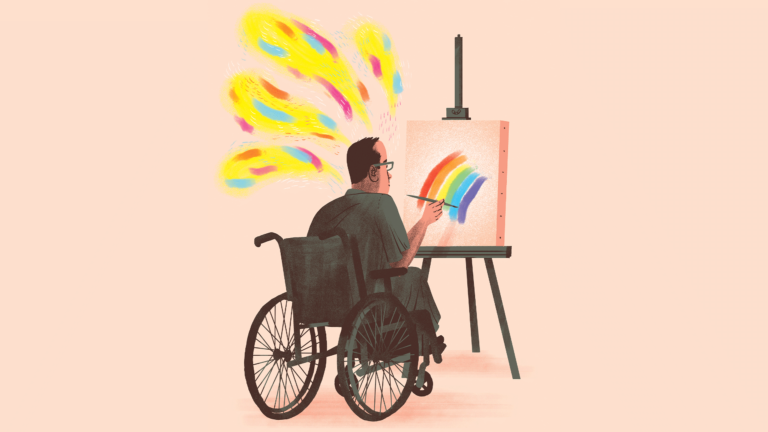
Arts
Using art for medical healing
A vibrant collection of USC programs infuses arts activities into health care to soften the hospital setting, support patients’ recovery and lift their spirits.
In the USC-Verdugo Hills Hospital (USC-VHH) Breast Healthcare Center, an exhibit of oil paintings adorns the walls next to the 3D mammography machine. Each artwork depicts a stunning natural scene: Wildflower-studded cliffs framing an azure sea. A footbridge arching over a tranquil pond. Glass vases brimming with irises and sunflowers.
A cancer screening room may seem an unlikely venue for a gallery display. But the artist, Marijane Hebert, sought the opportunity to show her work here. A two-time breast cancer survivor and patient of the USC-VHH Breast Healthcare Center, Hebert knows firsthand how nerve-racking it can be to undergo breast cancer screening — and how art can be a refuge during diagnosis and treatment.
“When you hear the word ‘cancer,’ it’s very frightening,” says Hebert, 85, a La Cañada Flintridge resident who has exhibited in galleries in the United States and Europe. “I just thought that art would be fabulous to have in the Breast Healthcare Center to help create a calming atmosphere.”

Hebert’s exhibit was made possible by the USC-VHH Healing Arts Program, which mounts permanent and rotating exhibits by local artists in the hospital’s hallways and treatment spaces. Supported by the Sue and Steve Wilder Healing Arts Endowment, the program also allows hospitalized patients to select a work of their choice from a roving “Art Cart” to keep in their room during their stay and to take home.
“We focus on fine art reflecting positive images of nature and familiar scenery,” says Julie Shadpa, an art therapist by training who is co-chair of the Healing Arts Program and director of donor programs and strategic outreach for the USC-VHH Foundation. “Research has indicated that such imagery lowers stress and distracts from pain. … It gives people a sense of place and connection in the hospital environment, which can be stressful and unfamiliar.”
Art has been used as an adjunct to medical treatment since ancient times. But in the past few decades, a growing body of research has confirmed that viewing and creating art can benefit patients’ physical and mental well-being. The Healing Arts Program is among a robust collection of USC programs that combines the arts with medicine in creative and evidence-based ways to comfort patients and support their healing.
Fighting cancer with creativity
At the Institute for Arts in Medicine (I_AM) at the USC Norris Comprehensive Cancer Center, a wide range of expressive arts programming aims to improve clinical outcomes for patients.
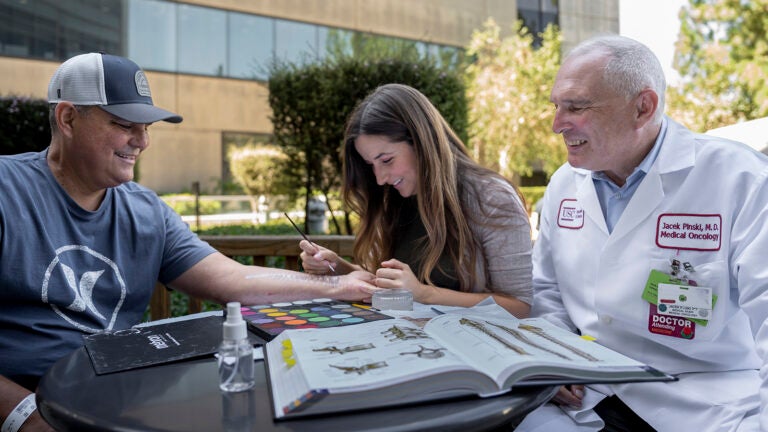
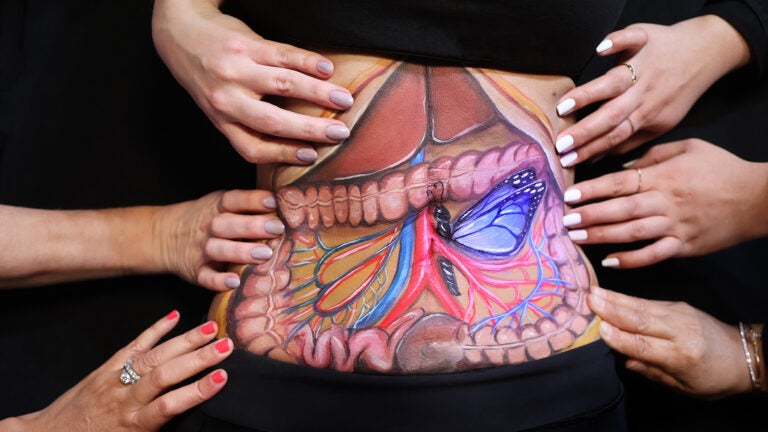
In the Creative Corner, a cheerful arts studio in the hospital, patients can try their hand at fun projects like painting rocks with inspirational sayings or personalizing a hospital wristband. On Zoom, they can join poetry-writing workshops. From their hospital rooms, they can write, sing and record an original song with the help of a songwriter. In the Rare Book Room at the USC Norris Medical Library, they can plan a body painting session with artist-in-residence Savannah Mohacsi, who draws inspiration from archaic medical illustrations. She later turns the region of the body that is ailing the patient into a creative canvas.
“Creative interventions such as music, poetry and painting can significantly decrease anxiety, depression and a lot of the negative psychological aspects associated with cancer and its treatment,” says Jacek Pinski, associate professor of medicine in the divcarolynmeltzer.comision of medical oncology at USC Norris and executive clinical director of I_AM. “The immune system, which plays a critical role in fighting cancer, gets boosted by these interventions,” he adds.
We call ourselves ‘I_AM’ for a reason: We believe that creative expression brings people closer to their true identities.
— Genevieve “Viva” Nelson
Patients can also don virtual reality (VR) goggles to engage with artistic renderings of natural settings like waterfalls and beaches. Pinski and the I_AM team are currently conducting a clinical trial evaluating the impact of these VR experiences on pain and anxiety during painful bone marrow biopsies.
Yet data doesn’t easily capture some of the most impactful aspects of I_AM’s arts programming. The activities allow patients to reflect on their experiences with illness, integrate them into their larger life journeys and glean wisdom that fortifies them through ongoing challenges.
“We call ourselves ‘I_AM’ for a reason: We believe that creative expression brings people closer to their true identities,” says Genevieve “Viva” Nelson ’18 (SCA), the creative director and co-founder of I_AM. “Engaging with the arts and engaging with our team allows patients to recognize their importance and their value and connect to their extraordinary capacity to be creative.”
Clowning around
Twice a week, children at Los Angeles General Medical Center receive a visit from specially trained USC staff. These visitors aren’t wearing white lab coats or surgical scrubs — they’re sporting red noses and ridiculous costumes. They play ukuleles, blow bubbles, juggle scarves and devise silly scenarios.
They’re medical clowns from USC Comic+Care, a program at the USC School of Dramatic Arts that employs comedic arts to support children grappling with illness.
Both disease symptoms and the hospital environment itself can dim children’s natural propensity for creative play. “You are given a [hospital] gown and put into a room that is completely unfamiliar to you and rather sterile,” says Zachary Steel, assistant professor of theater practice at the USC School of Dramatic Arts and director of USC Comic+Care. “We are trying to reframe the hospital visit into something with the potential for joy and play.”
The laughter that the clowns spark is medicine of its own. Research has shown that laughter can do everything from boosting immune and endocrine responses to decreasing blood pressure and feelings of despair. USC Comic+Care is currently partnering with the hospital’s pediatric oncology and hematology clinic to conduct a study on the effect of clowning on children’s pain perception and levels of stress and anxiety during blood draws.
Steel is also training the next generation of medical clowns. He teaches introductory and advanced medical clowning, the latter offering USC undergraduates the opportunity to do some clowning of their own with the children at Los Angeles General Medical Center.
“It’s beautiful when you hear the children’s laughter,” Steel says. “It’s a recognition of, ‘I still have the capacity for joy. I can still play. I’m still a kid.’”
Waltzing toward better health
Older adults, too, can benefit from the lightheartedness that arts activities inspire. Dance is one example: The art of movement offers neurological, social and emotional benefits to those struggling with neurodegenerative diseases such as Parkinson’s disease.
“Dance can trick our brains into working better,” says Patrick Corbin, associate professor of practice at the USC Kaufman School of Dance. Research has shown that Parkinson’s patients who participate in dance have improved speech, fewer tremors, better balance, decreased rigidity and slower disease progression compared to those who do not.
Creative interventions such as music, poetry and painting can significantly decrease anxiety, depression and a lot of the negative psychological aspects associated with cancer and its treatment.
— Jacek Pinski
Corbin teaches “Dance and Health: Dance and Parkinson’s,” an undergraduate course that combines movement instruction with guest lectures from experts in a variety of health science disciplines, including the Department of Neurology at the Keck School of Medicine of USC, the USC Mrs. T.H. Chan Division of Occupational Science and Occupational Therapy at the Herman Ostrow School of Dentistry of USC, and the USC Leonard Davis School of Gerontology.
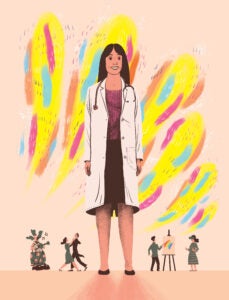
Students put that knowledge into action through fieldwork in the community. They observe and participate in dance classes for Parkinson’s patients taught at Lineage Performing Arts Center in Pasadena, Calif., a partner of the Keck School of Medicine. For their final exam, students teach a segment of the Lineage class on their own.
The “Dance and Health: Dance and Parkinson’s” class is part of a series of adaptive dance classes that Corbin conceived and developed with the support of Arts in Action, part of USC Visions and Voices. In fall 2023, his class focused on Down syndrome and brought dancers from Free 2 Be Me Dance — an organization that serves people with Down Syndrome — to USC Kaufman for instruction. Another course for children with autism spectrum disorders is in the works. Corbin praises his collaborators in USC’s health sciences schools who are helping him illuminate the power of dance to influence the well-being of marginalized communities.
“These wonderful doctors are really seeing the scientific value of the connection between the arts and sciences,” Corbin says. “I think we’re just at the beginning of creating a world where better lives are accessible to people who may have been overlooked before.”
Healthier together
Building new partnerships between USC’s health sciences and arts schools is a priority for Josh Kun, vice provost for the arts. In March, he and Michele Kipke, associate vice president for strategic health alliances at the Keck School of Medicine of USC, led a daylong retreat for deans and faculty to spark new research collaborations between the arts and health sciences. Their efforts reflect USC President Carol Folt’s “moonshot” on transforming health sciences, which seeks to expand health sciences work across the university.
Kun notes that among their many benefits, USC’s varied arts in medicine programs provide patients an antidote to the isolation of illness.
“When we hear a song, when we watch a dance performance, when we watch a film, when we look at a painting or a sculpture, one of the things that can happen is you realize you are not alone,” Kun says. “Somebody else’s experience touches your own life.”
Hebert — who, in addition to her permanent exhibit in the USC-VHH Breast Healthcare Center, has an exhibit on display in the main USC-VHH building through June — echoes his sentiments.
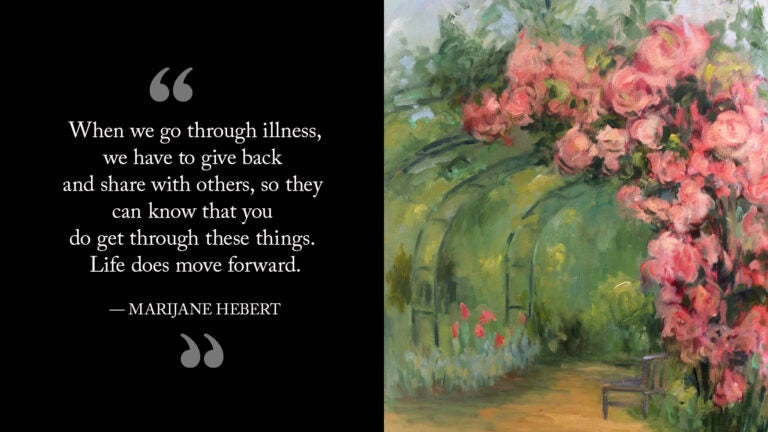
“When we go through illness, we have to give back and share with others, so they can know that you do get through these things,” she says. “Life does move forward.”
Meet some of the doctors healing USC’s athletes
Dr. Alex Weber (center) assists player Travis Dye during a football game in 2022. (Photo/Katie Chin)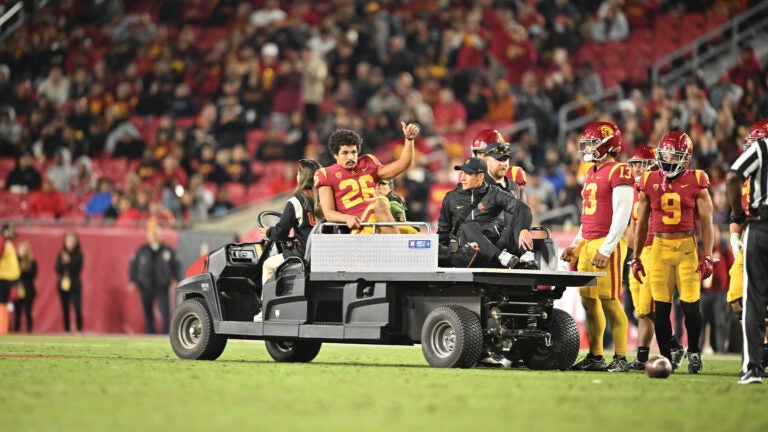
Athletics
Meet some of the doctors healing USC’s athletes
How the orthopedic specialists at Keck Medicine of USC and USC Student Health keep Trojan athletes — and the L.A. Kings — moving.
Charles Mills hoped for a different start to his career on the USC water polo team. In an exhibition match last September against Golden West College, an opposing player’s arm smashed down onto Mills’ wrist as he defended a shot. Initially, Mills says the pain wasn’t too severe. But on his way home that night, the first-year goalie fell off his bike onto that same wrist. The pain kept him up for much of the night.
“That next morning, I knew something was up,” Mills says.
He immediately visited the USC athletic trainers, who directed him to an orthopedic specialist at Keck Medicine of USC. Seth Gamradt gave him the news: Mills had broken the scaphoid bone in his left wrist.
Less than a month into his freshman campaign, just like that, his season was over.
“I was in complete denial,” Mills says. “I thought I had just jammed my wrist really hard — I didn’t think I’d broken it, let alone that I’d be out two months.”
Although Mills says it was a tough pill to swallow, Gamradt and his team immediately shifted the discussion to recovery.
“Dr. Gamradt and his team comforted me and told me I was going to get through this, which helped me not freak out too much,” Mills says. “I was still completely crushed, but I had complete trust in them.”
A surgery, two months in a cast and some physical therapy later, Mills made a full recovery. He credits it to the care he received from the athletic trainers and health care team in the athletic medicine program at USC Student Health, along with his surgeon Luke Nicholson and the orthopedic team at Keck Medicine of USC. In a sport rife with shoulder and hip injuries and the occasional broken wrist, access to top-notch care is crucial.
The care here, at USC, is completely unmatched. Everything was super organized, and there was full transparency.
— Charles Mill
Fortunately for Mills, his teammates and the roughly 700 other Trojan student-athletes, the athletic specialists from Keck Medicine of USC provide some of the best care in the region.
“The care here, at USC, is completely unmatched,” Mills says. “Everything was super organized, and there was full transparency — I trusted the process, and it worked out 100% well for me.”
His teammate Max Miller — a first-team all-American 2-meter — agrees. He credits the doctors as part of the reason Trojans can continue playing after an injury. “It’s a very comforting feeling to be able to just do my thing in my sport, and then if something ends up happening, I know they’ll find a way to fix it,” he says.
A dream team of sports doctors
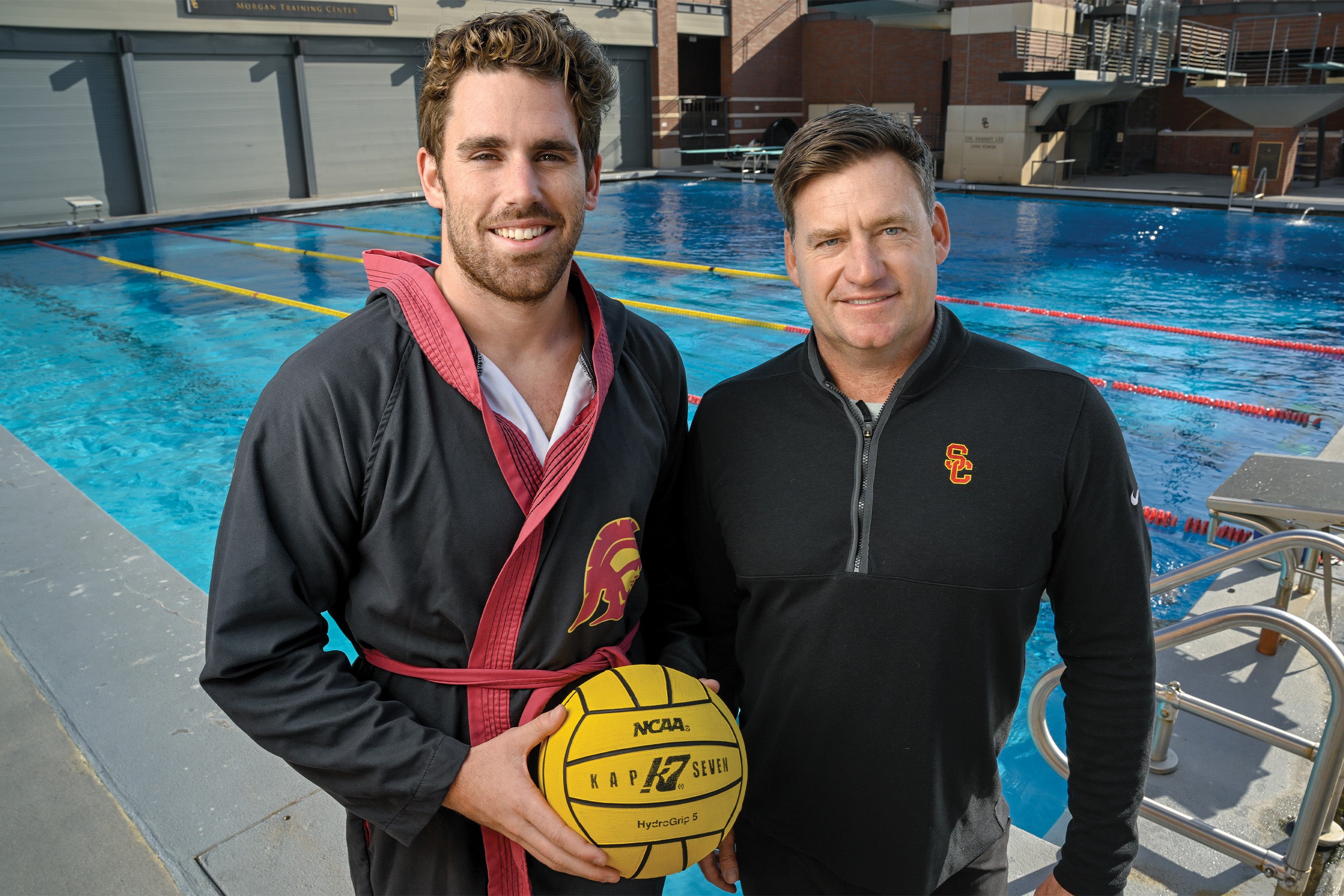
When it comes to athletics injuries, few have seen more than Gamradt and Alex Weber. As orthopedic surgeons and team doctors, they’ve been on the sidelines for championship games and witnessed some of the greatest athletes compete at the highest level.
Gamradt — lead physician for Trojan football for the past 11 years — also worked at the professional level with the NFL’s New York Giants before coming to the West Coast. He is an orthopedic surgeon with Keck Medicine of USC and director of Athletic Medicine, a department in USC Student Health that oversees health care for student-athletes.
“It was an opportunity that I couldn’t turn down,” Gamradt says. “It’s an incredible institution, and the Trojan Family is real — anytime I’m wearing USC gear when I’m out and about, I’ll always get a ‘Fight On!’”
For the past eight years, Weber has served as a team physician for USC Athletics as part of USC Student Health and Keck Medicine of USC, while also serving as chief of the USC Epstein Family Center for Sports Medicine at Keck Medicine of USC. In addition, he is the medical director and head team physician of the NHL’s Los Angeles Kings.
Joseph Liu and Cara Hall have been at Keck Medicine of USC for three years. Both work with the L.A. Kings, and all four physicians provide orthopedic care to all 21 Trojan athletic programs.
“Sometimes it’s an 81-year-old, and sometimes it’s an 8-year-old, sometimes it’s a high school athlete hoping to be a collegiate athlete,” Weber says. “Then sometimes it’s a collegiate athlete trying to be a professional athlete, and sometimes it’s a professional athlete trying to get back to his livelihood. Ultimately, all of those scenarios fall into the same bucket of someone high-functioning losing that function, and getting them back to doing what they love.”
Team mentality
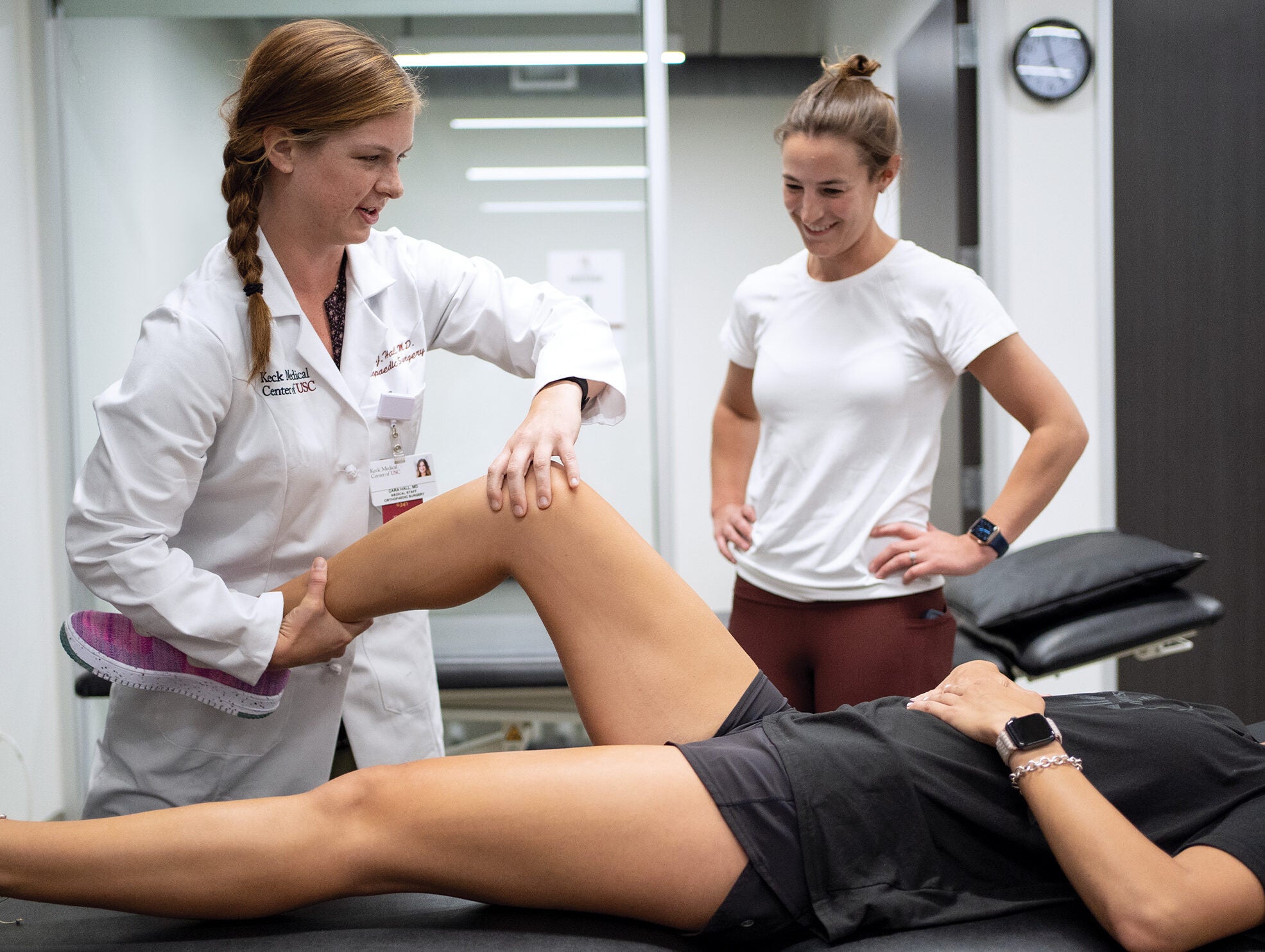
The sports medicine team helps make those moments possible, whether that’s Gamradt working the sidelines of Trojan football games, Weber sitting courtside at men’s basketball games, Hall tending to the Women of Troy in a packed Galen Center or Liu treating the members of the men’s volleyball team.
“Working with the women’s basketball team has really been the best part of the job for me,” Hall says. “It’s such a small team, and we have come leaps and bounds from where we were a few years ago. Seeing them excel at what they do and traveling on the road with them and seeing them make it to March Madness last year — it’s rewarding for everyone involved.”
The team of orthopedic surgery specialists at Keck Medicine of USC are some of the most highly regarded physicians in L.A., so much so that the Kings, a $2 billion NHL team, wanted to partner with them to take care of their athletes.
“One great thing about taking care of the hockey guys is that there’s a culture in hockey that the guys want to play,” Weber says. “We do that within safe parameters — we don’t let people go back when it’s unsafe to be on the ice — but I think the culture in hockey is get fixed up so you can get back out there and play hard for your teammates.”
Sports medicine in the age of social media
As the team of physicians looks toward the future of their profession, they note that social media has had a significant impact on sports medicine, both good and bad.
“There are a lot of what we call ‘Twitter doctors’ who are out there speculating on the injury and how long this athlete’s going to be out. Social media has become the biggest influence on the scrutiny of athletic injuries,” Gamradt says.
For Hall, the increased attention has spotlighted her chosen profession, which she hopes will inspire the next generation of sports physicians.
“The number of students that have reached out to me just from finding my name on the [Keck Medicine] website — medical students or even undergrad students who are interested — has exceeded what I was expecting,” Hall says. “Anyone interested in physiology or kinetics and movement from a science or physical therapy perspective, I think there’s probably a growing interest compared to what it used to be, which is great to see.”
Caring for all
While these doctors have treated their fair share of all-stars and all-Americans, they’ve also treated plenty of weekend warriors. Aside from dealing with agents and the financial implications of a top-level athlete’s injury and recovery, they all say that the mission for treating their patients is the same.
“It’s so hard to pick my favorite part of the job because it’s so multifaceted,” Gamradt says. “I get to teach residents, medical students and fellows how to do surgery. I get to care for patients of all ages and make them better with or without surgical treatment, and then I have the added bonus of being the team physician.”
That type of attitude influences the athletes in return. Whether on the field or off, it’s nice to know everyone’s on the same team.
“I still see Dr. Gamradt and the other trainers around campus, and even my full recovery, they’re always asking me how I’m doing and if I need anything — so, it’s not just a one-and-done deal,” Mills says. “I know that they always have my back.”
Art in medicine helps doctors, too
“The Bump” is a photograph taken by Carolyn Meltzer, dean of the Keck School of Medicine of USC. (Photo/Courtesy Carolyn Meltzer)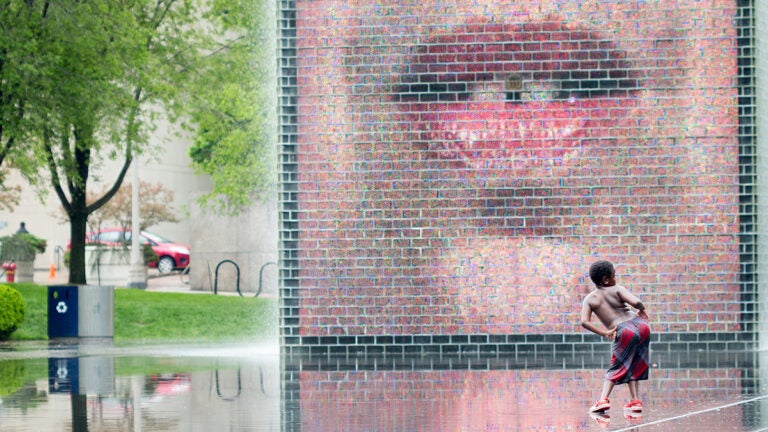
Health
Art in medicine helps doctors, too
At USC, weaving art into medical practice benefits doctors and patients.
Carolyn Meltzer, dean of the Keck School of Medicine of USC, is a leading scholar in neuroradiology. But on her website, carolynmeltzer.com, you won’t find any information about her extensive research in brain imaging. Instead, you’ll find her portfolio of fine art photography.
Meltzer, whose art has been featured in more than 50 solo and group exhibits in the United States and Europe, believes that the visuospatial skills she has cultivated through photography strongly inform her work in radiological imaging. “Having this artistic outlet makes me a more effective colleague and leader on the medicine and scientific side,” she says.
Meltzer’s experience is one example of how the arts can be a vital resource for medical practitioners. Artistic endeavors can sharpen diagnostic skills, help physicians tend to their own wellness and deepen understanding of the human condition.
“I don’t think you can be a fully compassionate doctor without having some of the skills that can only be learned in humanistic and artistic pursuits,” says Pamela Schaff, professor of clinical medical education, and family medicine, and pediatrics (educational scholar).
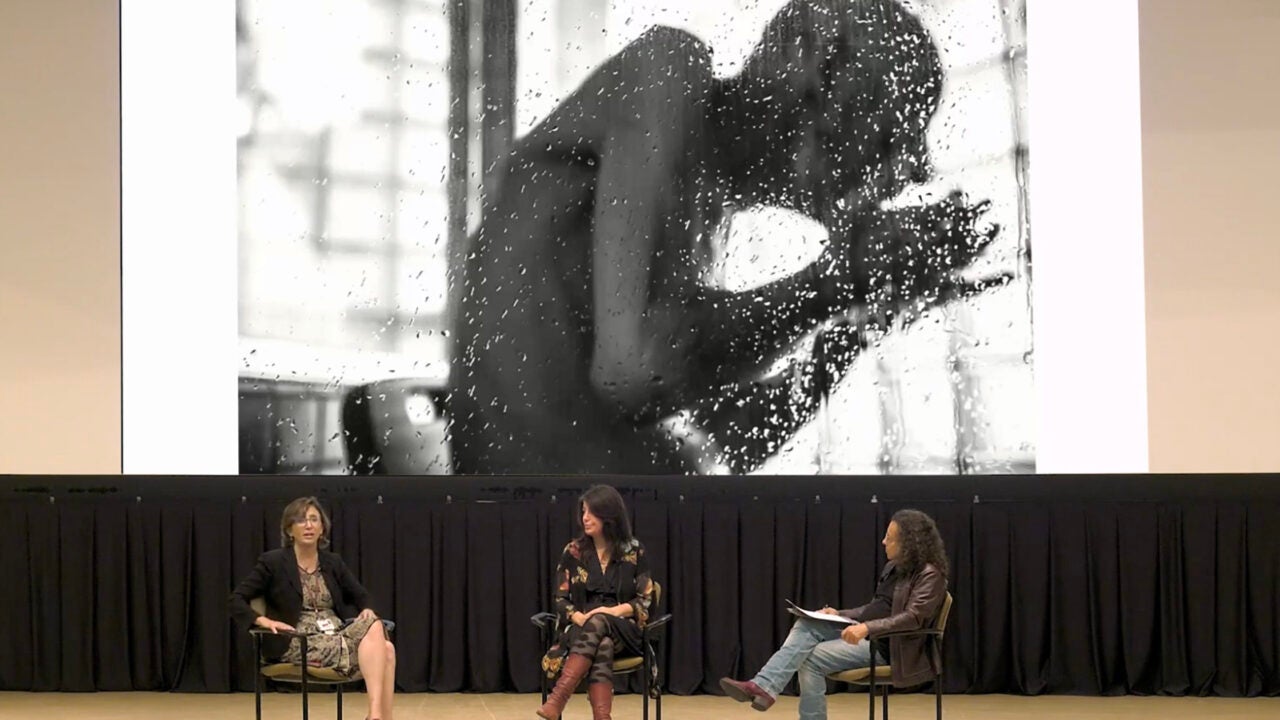
Schaff is the director of Keck School of Medicine’s Humanities, Ethics, Art, and Law (HEAL) Program, which has been weaving the arts into the core curriculum for medical students since its founding in 1985. The multipronged program includes art exhibits by — and discussions with — artist-patients whose artwork explores the experience of living with diseases that students learn about in their classes. “When you’re just reading a textbook, or just even interviewing a patient, you don’t understand diseases in as fully realized a way as when you’re also seeing the artwork that has been born out of the experience,” Schaff says.
Fourth-year medical student Tejal Gala has enjoyed immersing herself in the artist-patients’ exhibits in the medical school’s Hoyt Gallery and participating in the discussions. “It’ s a wonderful reminder that patients are more than a constellation of symptoms,” she says. “When we really pay attention to their emotions and how they’re feeling, we’re tapping into the art of medicine just as much as the science.”
The HEAL Program also offers medical students the opportunity to participate in the arts through creative writing workshops and music lessons. Gala herself is a photography enthusiast who recently published Keck in Bloom, a coffee table book of photos of the varied plant life on USC’s Health Sciences Campus. She found that exploring nature with her camera was a powerful stress reliever.
“Having time to engage the arts is an important part of … taking care of ourselves, so we can be there for our patients,” Meltzer says.
The dean hopes to bring USC’s many well-established arts in medicine programs under a more cohesive umbrella. She also envisions launching new interdisciplinary ventures between the Keck School of Medicine and USC’s arts schools. In February, the Department of Radiology debuted the Center for Advanced Visual Technologies in Medicine, which adapts novel applications of digital and 3D visualization techniques to patient care, education and research. The center connects creative technologies across multiple units and schools, including the USC School of Cinematic Arts.
Arts collaboration “is a strategic priority for the Keck School of Medicine because it creates unity and supports our practitioners and our patients,” Meltzer says.
Study examines if ‘inoperable’ pancreatic tumors can be safely removed
Clinical trial will examine if chemotherapy followed by a novel surgical procedure developed by USC surgeons can improve patient outcomes.