Key USC researchers building dementia cost model to help patients, families

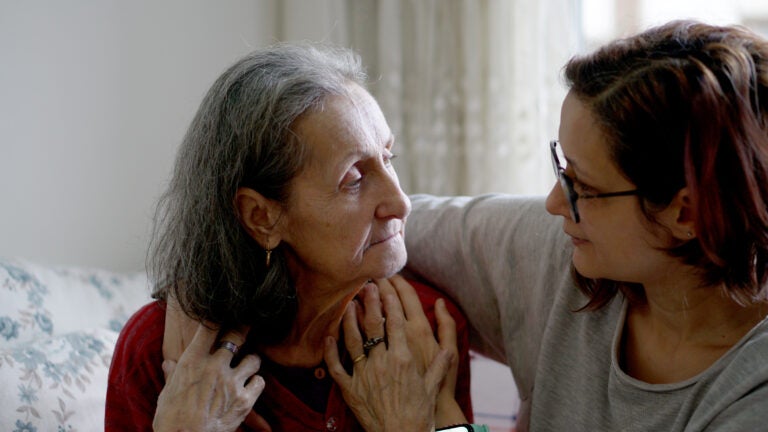
Dementia cost: Woman with her older mother

Dementia costs can be catastrophic for families, depleting savings and pressing caregivers to leave their jobs. (Photo/iStock)
Health

Key USC researchers building dementia cost model to help patients, families

Knowing the actual costs of dementia could help families plan their budgets and support needs, inform treatment and caregiving options, and shape health care policy.

June 26, 2024

By Leigh Hopper

An A-list of researchers from across USC is building a dementia cost model that will generate comprehensive national, annual estimates of the cost of dementia that could benefit patients and their families, thanks to a five-year, $8.2 million federal grant from the National Institute on Aging.

A firm grip on the costs of the condition could assist families living with dementia with planning their budgets and support needs, inform treatment and caregiving options, and help shape health care policy.
Box: Who’s involved“We currently have estimates for a particular set of costs, but we’ve learned those estimates don’t encompass nearly all the costs to the person with dementia, their family and to society,” said Julie Zissimopoulos, a professor at the USC Price School of Public Policy and the USC Schaeffer Center for Health Policy & Economics, who is leading the project. “Everything about this disease affects the family’s pocketbook.”

Dementia costs can be catastrophic for families, depleting savings and pressing caregivers to leave their jobs. The condition imposes a staggering economic burden on the United States as a whole. This year, total health care and long-term care costs for individuals with Alzheimer’s or other dementias are projected to reach $360 billion, and may soar to nearly $1 trillion by 2050, the Alzheimer’s Association projects.

“Other consequences may include caregivers’ lower retirement savings or limited ability to send their children to college,” said project advisor Maria Aranda, a professor at the USC Suzanne Dworak-Peck School of Social Work who studies the impact of Alzheimer’s on Black and Latino families. “In turn, this leads to an intergenerational transmission of inequality and financial vulnerability for families of persons with dementia.”

The tool, known as a “dynamic microsimulation model,” will incorporate multiple data sets including  data from the Centers for Medicare & Medicaid Services and national surveys on aging Americans such as the Health and Retirement Study.  The model will account for costs across a range of disease stages, including those accrued by the person living with dementia, their care partners and caregivers, and even their payers. In addition, the model’s estimates will adjust for prevention and treatment innovations.

The research team is co-led by Dana Goldman, who will become the director of the new USC Schaeffer Institute for Public Policy & Government Service on July 1 after having served as the dean of the USC Price School for the past four years. The A-team also includes experts from:

  • Keck School of Medicine of USC.
  • USC Alfred E. Mann School of Pharmacy and Pharmaceutical Sciences.
  • USC Leonard Davis School of Gerontology.
  • USC Suzanne Dworak-Peck School of Social Work.
  • USC Viterbi School of Engineering.

“Once you factor in the social costs of Alzheimer’s — how it affects family, caregivers and others — you quickly realize it is not just an illness but a social epidemic,” Goldman said. “This project will help amplify the importance of finding treatments that forestall the devastation.”

Patients, caregivers join in dementia cost effort

Patients and caregivers are among the experts who will advise on the project. Other advisors include representatives of the Alzheimer’s Association, UCLA, the University of Pennsylvania and the Los Angeles County Department of Public Health.

USC Viterbi scientists will design an interface so that the tool, which will be publicly available, is user-friendly.

In addition to providing up-to-date and comprehensive annual estimates, researchers will be able to calculate, for example, the social and economic impact of drugs that treat the neuropsychiatric symptoms associated with advanced dementia — and keep patients out of hospitals and emergency rooms. The tool might also measure cost savings provided by a new drug with modest benefit, but which delays by two months the expense of 24-hour care.

“Leqembi is a great example. It’s a new FDA-approved treatment for early-stage Alzheimer’s; we have data from clinical trials that informs patients and the health care providers about safety and efficacy, ” Zissimopoulos said. “But these data are not informative about the other outcomes patients and their families care about including quality of life impacts that may result from this slowing of cognitive decline. And we want to know about not just the 18 months of the clinical trial, but we want to know about them for 10 years, for 20 years.

“With the infrastructure that we’re building, we’ll be able to understand better what is the value and for whom.”

The Supreme Court’s ‘Dobbs’ ruling, 2 years later: It’s about more than just abortion 

Supreme Court building

On June 24, 2022, the Supreme Court ended constitutional protections for abortion that had been in place nearly 50 years. (Photo/iStock)

Policy/Law

The Supreme Court’s ‘Dobbs’ ruling, 2 years later: It’s about more than just abortion 

The rollback of Roe v. Wade added fuel to a contentious nationwide debate that now extends well beyond the right to terminate a pregnancy. USC experts discuss Dobbs’ lasting impacts and potential influence in the November election.

June 24, 2024

By Nina Raffio

Two years have passed since the U.S. Supreme Court’s landmark decision in Dobbs v. Jackson Women’s Health Organization, which overturned Roe v. Wade and ended federal protections for abortion rights that had stood for over half a century.

The ruling triggered a flurry of state-level legislative actions, creating a patchwork of laws significantly impacting reproductive freedoms once guaranteed at the federal level. What began as a legal challenge over abortion rights has morphed into a mosaic of partisan initiatives spanning access to contraceptives, emergency medical care and even in vitro fertilization, raising broader questions about women’s bodily autonomy.

“When we trace the long arc of history, we see rights advancing on some fronts while regressing on others. Sometimes, the arc of justice bends in the right direction. But as someone who studies law and feminism, it’s concerning to see the current movement toward regressing women’s rights, particularly their sexual and reproductive freedoms,” said Aya Gruber, the Harold Medill Heimbaugh professor of law at the USC Gould School of Law.

Impact on reproductive care and legal uncertainty

Last week, the U.S. Supreme Court unanimously rejected an effort to restrict access to mifepristone — one of the most widely used abortion medications in the country, accounting for 63% of all U.S. abortions in 2023.

“The Supreme Court gave women’s bodies a momentary reprieve from further regulation by the government by dismissing the mifepristone case on the ground that the activist doctors lacked standing,” said Gruber, an expert in criminal law and procedure, violence against women and feminist legal theory.

“What the public needs to understand is that this is a procedural ruling and not a proclamation that the distribution of mifepristone is lawful or that birth control is protected by the constitution,” she said. “Plaintiffs with standing may lodge the same challenge that the [Food and Drug Administration] lacked authority to approve mifepristone.”

Other battles are being waged. The Supreme Court is deliberating on another abortion case regarding whether a federal law on emergency treatment at hospitals overrides state abortion bans — such as Idaho’s Defense of Life Act — in rare emergency cases where a pregnant patient’s life is at risk.

“Additionally, pro-life groups are resurrecting an 1800s obscenity law, the Comstock Act, to argue for a national ban on abortion and ‘abortifacient’ drugs, equipment and even information,” Gruber said. “This fight is far from over.”

Other experts agree.

Dima Qato, an expert in health policy, pharmacoepidemiology, drug safety and health disparities, emphasized that the Dobbs has not only impacted access to abortion care, forcing many women in restrictive states to travel out-of-state or self-manage an abortion, but has also threatened access to contraception, which is critical to the prevention of pregnancy in states where legal abortion is no longer an option.

“Efforts to expand and protect access to emergency contraceptives — the only safe and effective option to prevent a pregnancy after contraceptive failure, unprotected sexual intercourse or rape — should be a priority for many federal and state policy and public health officials in the post-Dobbs U.S.,” Qato said.

Qato is the Hygeia Centennial Chair and associate professor at the USC Alfred E. Mann School of Pharmacy and Pharmaceutical Sciences and a senior fellow at the USC Schaeffer Center for Health Policy & Economics.

Will abortion on the ballot trigger a national reckoning at the polls?

In November, residents in Colorado, Florida, Maryland and South Dakota will vote on abortion access initiatives, with six other states advancing similar measures.

John Matsusaka, an expert on direct democracy and a professor of business, law and political science at USC, emphasized the potential of state ballot initiatives and referendums in a 2022 op-ed for Politico titled “Let the People Decide on Abortion.”

According to Matsusaka, these initiatives empower citizens to directly influence policy, offering a powerful mechanism to counter legislative decisions they oppose.

“Opinion surveys on abortion tell us that most Americans favor a compromise policy somewhere in between what the activists on both sides want — legal abortion in the early stages of pregnancy, with increasing prohibitions as the fetus becomes viable,” said Matsusaka, executive director of the Initiative and Referendum Institute at USC, which studies and tracks ballot measures and propositions throughout the country.

“If legislators take abortion policy in an extreme direction, a real risk in this age of hyper-polarized parties, initiatives and referendums let voters steer policy back toward the center,” he said.

Jane Junn, an expert on political behavior, and polling methods and analysis, added that there is widespread support for reproductive rights across gender lines in the U.S.

“Contrary to common speculation, American women are not the only ones in favor of policies protecting a right to choice, and there is little variation between the sexes in terms of support for abortion rights,” said Junn, the USC Associates Chair in social sciences and professor of political science and gender and sexuality studies at the USC Dornsife College of Letters, Arts and Sciences.
“Indeed, a majority of Americans of all sexes support reproductive freedom. The most substantial variation is by partisanship, with Republican-affiliated voters more supportive of abortion restriction,” she said, adding that even states with strong Republican majorities such as Kansas have supported policies to protect abortion rights following Dobbs.

“Having lost the right to choice at the federal level is a rallying point for Democratic Party voters, and will likely enhance turnout among these Americans on Election Day in November.”

Experts converge at USC Music, Health, and Policy workshop

Renee Fleming, Jason King and Gail Eichenthal on stage

Opera soprano Renée Fleming, center, has a discussion with Dean Jason King, right, and moderator Gail Eichenthal, left, during a research workshop on music, health and policy. (Photo/Gus Ruelas)

University

Experts converge at USC Music, Health, and Policy workshop

USC Thornton Dean Jason King and LA Opera soprano Renée Fleming were among the speakers at the workshop hosted at Cammilleri Hall on the University Park Campus.

June 18, 2024

By Will Kwong

USC recently hosted its first Music, Health, and Policy workshop as part of Los Angeles County Arts and Health Week, filling Joyce J. Cammilleri Hall on the University Park Campus.

Event organizer Assal Habibi, an associate professor at the Brain and Creativity Institute at the USC Dornsife College of Letters, Arts and Sciences who explores the intersection between music and the human brain, brought together a wide range of experts on the importance of art and its effect on human development and well-being.

“The workshop aims to bring people together to foster collaboration and combine our efforts to advance the field of music science,” Habibi said. “Our goal is to go beyond generating scientific results and research and to drive meaningful changes in both education and health policy.”

Speakers included LA Opera soprano Renée Fleming, Dean Jason King of the USC Thornton School of Music, and Shrikanth “Shri” Narayanan, University Professor and vice president for presidential initiatives at USC.

Music’s impact on the brain

Research has shown music’s impact on childhood development and ability to address elderly cognitive decline. One USC study showed that music education can boost cognitive development and emotional well-being among K-12 students. Among older people, the use of music can help patients suffering from dementias such as Alzheimer’s disease recall memories.

The importance of art in schools, especially in relation to the passing of California Proposition 28, was top of mind for many attendees of the event. Approved by voters in 2022, Proposition 28 mandated an increase in funding for arts and music education in K-12 public schools.

Exploring the overlap between music and health

“I’m aiming to bring more conversation on health into the curriculum, and ideally aiming to develop some programs around music, health and sciences,” King said.

Shrikanth Narayanan
Shrikanth Narayanan spoke about USC’s role in the future of health and wellness. (Photo/Gus Ruelas)

“This workshop brought together people who are looking at not only the science of music, but also how it can help in the healing of humans,” Narayanan said. “As a researcher and member of the USC community, I’ve been working at the interface between the mind, body, and music and society. And my work has always been at the nexus of what it means to be human and how it shapes their experiences, especially incorporating computational and engineering methodologies.”

“Visual art, therapy, theater, dance — all of these aspects of who we are as human beings creatively — belong in schools,” Fleming said.

Dobbs, 2 years later: Abortion and the 2024 election

U.S. Capitol building over a pink sky

Source Alert

Dobbs, 2 years later: Abortion and the 2024 election

June 14, 2024

June 24 marks two years since the U.S. Supreme Court’s decision in Dobbs v. Jackson Women’s Health Organization, which overturned Roe v. Wade and effectively ended federal protections for the right to abortion.

USC experts are available to discuss how the landmark ruling has significantly changed reproductive rights and access across the country, and how these critical issues might shape voter behavior and decisions in the upcoming presidential election.

Contact: Nina Raffio, raffio@usc.edu or (213) 442-8464; USC Media Relations, uscnews@usc.edu or (213) 740-2215

Supreme Court blocks abortion pill ban, but experts warn legal battles are ‘far from over’

Aya GruberLast week, the U.S. Supreme Court unanimously rejected an effort to limit access to the abortion pill mifepristone.

“The Supreme Court gave women’s bodies a momentary reprieve from further regulation by the government by dismissing the mifepristone case on the ground that the activist doctors lacked standing. What the public needs to understand is that this is a procedural ruling and not a proclamation that the distribution of mifepristone is lawful or that birth control is protected by the Constitution,” said Aya Gruber, an expert in criminal law and procedure, violence against women and feminist legal theory.

“Plaintiffs with standing may lodge the same challenge that the FDA lacked authority to approve mifepristone. Additionally, pro-life groups are dusting off an 1800s obscenity law, the ‘Comstock Act,’ to argue for a national ban on abortion and ‘abortifacient’ drugs, equipment, and even information. This fight is far from over.”

Gruber is the Harold Medill Heimbaugh professor of law at the USC Gould School of Law.

Contact: agruber@law.usc.edu

How most Americans feel about reproductive rights

Jane Junn“Contrary to common speculation, American women are not the only ones in favor of policies protecting a right to choice, and there is little variation between the sexes in terms of support for abortion rights,” said Jane Junn, an expert on public opinion, political behavior, and polling methods and analysis.

“Indeed, a majority of Americans of all sexes support reproductive freedom, and the most substantial variation is by partisanship, with Republican-affiliated voters more supportive of abortion restriction. Nevertheless, even states with strong Republican majorities such as Kansas have supported policies to protect abortion rights following Dobbs. Having lost the right to choice at the federal level is a rallying point for Democratic Party voters, and will likely enhance turnout among these Americans in 2024.”

Junn is the USC Associates Chair in social sciences and professor of political science and gender and sexuality studies at the USC Dornsife College of Letters, Arts and Sciences.

Contact: junn@usc.edu

State ballot initiatives give voters a say on abortion post-Dobbs

John MatsusakaIn November, residents in Colorado, Maryland, South Dakota, and Florida will vote on abortion access initiatives, with six other states also advancing similar measures.

“Using referendums has some advantages over the more traditional legislative path. Most important, it allows citizens to overrule their elected representatives if they dislike the state’s policy choice,” wrote John Matsusaka, an expert on direct democracy and a professor of business, law and political science at USC in his 2022 op-ed in POLITICO, “Let the People Decide on Abortion.”

“Opinion surveys on abortion tell us that most Americans favor a compromise policy somewhere in between what the activists on both sides want — legal abortion in the early stages of pregnancy, with increasing prohibitions as the fetus becomes viable,” said Matsusaka, executive director of the Initiative and Referendum Institute at USC, which studies and tracks ballot measures and propositions throughout the country.

“If legislators take abortion policy in an extreme direction, a real risk in this age of hyper-polarized parties, initiatives and referendums let voters steer policy back toward the center.”

Contact: matsusak@marshall.usc.edu

Preserving access to emergency contraception

Dima M Qato“The Dobbs decision has not only impacted access to abortion care, forcing many women in restrictive states to travel out-of-state or self-manage an abortion, but has also threatened access to contraception, which is critical to the prevention of pregnancy in states where legal abortion is no longer an option,” said Dima Qato, an expert in health policy, pharmacoepidemiology, drug safety and health disparities.

“Efforts to expand and protect access to emergency contraceptives—the only option safe and effective option to prevent a pregnancy after contraceptive failure, unprotected sexual intercourse or rape–  should be a priority for many federal and state policy and public health officials in the post-Dobbs U.S.”

Qato is the Hygeia Centennial Chair and associate professor at the USC Alfred E. Mann School of Pharmacy and Pharmaceutical Sciences and a senior fellow at  the USC Leonard D. Schaeffer Center for Health Policy and Economics.

Contact: qato@usc.edu

Additional Experts

Annalisa Enrile is an expert on gender equity, human rights, gender-based violence, and global social justice. Enrile is a teaching professor of social work at the USC Suzanne Dworak-Peck School of Social Work. Enrile has previously provided insights into how restrictive abortion policies disproportionately affect vulnerable populations of women, including victims of sex trafficking and domestic violence.

Contact: enrile@usc.edu

###

Christian Grose is an expert in American government, political institutions, and the politics of the policymaking process. Grose is an associate professor at the USC Dornsife College of Letters, Arts and Sciences and academic director of the USC Schwarzenegger Institute for State and Global Policy.

Contact: cgrose@usc.edu

###

Sofia Gruskin is director of the USC Institute on Inequalities in Global Health with joint appointments at the Keck School of Medicine of USC, USC Gould School of Law, and USC Dornsife Spatial Sciences Institute.

Contact: gruskin@usc.edu

###

Brian Nguyen is an associate professor of clinical obstetrics and gynecology at the Keck School of Medicine of USC. Nguyen’s research focuses on men’s access to emergency contraception, disparities in the use of vasectomy, and men’s experiences of unintended pregnancy and abortion.

Contact: nguyenbt@usc.edu

###

Mindy Romero is a research assistant professor and the founder and director of the Center for Inclusive Democracy at the USC Price School of Public Policy. She is an expert in political sociology, political behavior, voting rights and civic engagement.

Contact: msromero@usc.edu

###

(Photo/iStock)