Marijuana use is legal, but that doesn’t mean it’s without health risks. Thoracic surgeon Brooks Udelsman of Keck Medicine of USC explains.
Category: Uncategorized
What causes common heart valve problems, and how are heart valve problems diagnosed and treated?
Cardiac surgeon Serge S. Kobsa of the USC Cardiac and Vascular Institute explains common heart valve problems, their causes and treatments.
Exploring how the cochlea responds to speech sounds
USC’s John Oghalai and Alberto Recio receive an American Hearing Research Foundation Discovery Grant.
USC’s Acoustic Neuroma Center leads the way in personalized care
For patients with acoustic neuroma, USC personalizes treatment plans with an emphasis on hearing preservation, balance care and rehabilitation.
USC United Against Alzheimer’s: Collaborating in Research and Care

Health
USC United Against Alzheimer’s: Collaborating in Research and Care
USC researchers and clinicians are making groundbreaking strides in the treatment, prevention and care of Alzheimer’s.
Alzheimer’s disease is one of the most enigmatic brain afflictions and among the greatest health care challenges facing the nation. It affects more than 7 million Americans — a number projected to double by 2060.
This feature series showcases how USC researchers and clinicians are on the cusp of a revolution in Alzheimer’s prevention, making groundbreaking strides in the treatment, prevention and care of Alzheimer’s. In the near future, their discoveries promise to make the devastating disease a thing of the past.
Part 1: Can we prevent Alzheimer’s disease within a decade?

Part 2: To reduce Alzheimer’s risk, focus on overall health

USC’s new Performing Arts Physical Therapy Fellowship is a West Coast first
Division of Biokinesiology and Physical Therapy teams with USC’s performing arts schools to keep musicians, dancers, actors, singers and circus performers in top shape.
Who do you think you are? Learn what DNA tests reveal — and what they don’t
Consumer DNA testing is reshaping notions of family, identity and risk. But what it reveals — and what it doesn’t — may surprise you. USC experts explain.
To reduce Alzheimer’s risk, focus on overall health
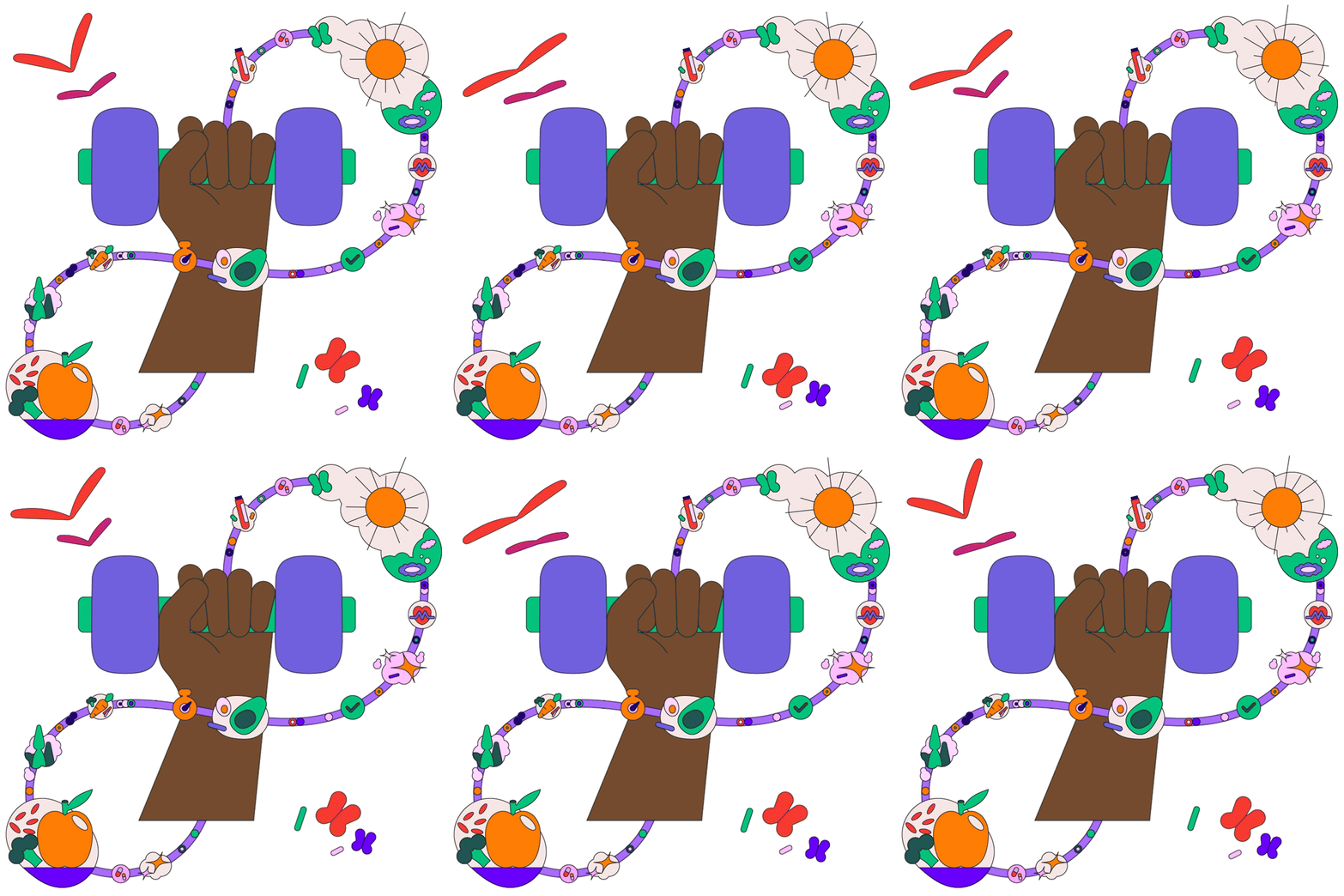
USC researchers are identifying environmental and lifestyle factors that contribute to Alzheimer’s risk and resilience. (Illustration/Bratislav Milenkovic)
Health
To reduce Alzheimer’s risk, focus on overall health
Researchers across USC are studying how lifestyle and environment influence dementia risk and resilience. They’re finding that what’s good for the body is also good for the brain.
USC United Against Alzheimer’s: Collaborating in Research and Care
Alzheimer’s disease is one of the most enigmatic brain afflictions and among the greatest health care challenges facing the nation. It affects more than 7 million Americans — a number projected to double by 2060. This article is the second in a series about how USC researchers and clinicians are making groundbreaking strides in the treatment, prevention and care of Alzheimer’s. Read the first one here.
In the lowland forests of northern Bolivia, along streams and rivers that snake toward the mighty Amazon, the indigenous Tsimané people live much as they have for centuries. Most of each day is spent securing food through hunting, fishing, foraging and tending small farms with hand tools. Large, multigenerational families live together in thatched-roof huts, forming the basis of close-knit villages that are relatively isolated from mainstream society.
Alzheimer’s disease and other dementias are virtually nonexistent among them.
Margaret Gatz — professor of psychology at the USC Dornsife College of Letters, Arts and Sciences and an expert on risk factors for Alzheimer’s disease — is part of a team of U.S. researchers and international collaborators who have discovered that the Tsimané and the Mosetén (a related indigenous group) have among the lowest rates of dementia in the world. Only about 1% of older Tsimané and Mosetén people suffer from dementia, while 11% of people age 65 and older in the United States do.

“Studying these groups in Bolivia gives us insight into risk and protective factors for Alzheimer’s and other dementias we couldn’t find anywhere else,” says Gatz, senior scientist at the USC Center for Economic and Social Research (CESR). “We’re trying to think about what their lifestyles tell us about how cognitive impairment develops and, therefore, what the implications are for industrialized Western lifestyles.”
USC has long been a world leader in Alzheimer’s research, with scientists across the university engaged in the full spectrum of discovery to battle this devastating disease. While a critical mass of USC researchers is on the cusp of being able to prevent the brain changes that lead to Alzheimer’s with advanced medications, another set is focused on identifying environmental and lifestyle factors that contribute to Alzheimer’s risk and resilience.
“By understanding which risk factors for Alzheimer’s disease are modifiable, we can delay the onset of the disease and reduce the burden on people, families and society,” says Jinkook Lee, professor of economics at USC Dornsife and director of the Program on Global Aging, Health, and Policy at CESR.
Alzheimer’s disease is characterized by hallmark brain changes: plaques made of a protein called beta-amyloid, and tangles made of a protein called tau. Though the pathology manifests in the brain, “the strongest factors for reducing vulnerability to Alzheimer’s disease are those affecting your overall physical health,” says Christian Pike, professor of gerontology at the USC Leonard Davis School of Gerontology. “My lab is thinking about Alzheimer’s less as just a brain disease and more as a whole-body disease.”
Studying these groups in Bolivia gives us insight into risk and protective factors for Alzheimer’s and other dementias we couldn’t find anywhere else.
Margaret Gatz, professor of psychology
Movement is a ‘magic pill’
In modern American life, securing food might involve cruising through the drive-thru or tapping a delivery app. But the Tsimané, like our Paleolithic hunter-gatherer ancestors, expend a great deal of physical effort to meet their food needs.
Research by David Raichlen, professor of biological sciences and anthropology at USC Dornsife, suggests that our brains and organ systems evolved to require a high level of physical activity to maintain their health. “Physical activity is about as close as we have to a magic pill because it benefits so many aspects of human physiology,” he says.
All forms of exercise have benefits for brain health and are associated with a reduced risk of Alzheimer’s and other dementias. “Any amount of exercise is better than none,” Raichlen says. “Whatever physical activity you really like to do, that’s what you should do.”
Movement forms that incorporate slow, controlled breathing, such as yoga and tai chi, may be particularly beneficial for protecting the brain from Alzheimer’s changes. Mara Mather, professor of gerontology at USC Leonard Davis, found that 20 minutes of slow-paced breathing twice a day for four weeks is associated with decreases in beta-amyloid 40 and 42 in the blood — biomarkers for Alzheimer’s brain changes. (You don’t even need to move while slow breathing to reap these benefits.)
Exercise reduces inflammation in the body and brain and activates brain-derived neurotrophic factor, a protein that nourishes neurons. “With aging and in Alzheimer’s disease, the production of BDNF starts to decline, and exercise can reactivate that,” says Constanza Cortes, assistant professor of gerontology at USC Leonard Davis.
Cortes’ lab is investigating how skeletal muscles communicate with the brain during exercise. In the development of Alzheimer’s disease, the brain’s ability to clear beta-amyloid and tau proteins is impaired, leading to their accumulation. Cortes compares these plaques and tangles to trash that builds up on city streets.
“One of the exercise pathways that we’re following reactivates the ability of the brain’s ‘trash trucks’ to get to where they need to be and get rid of these accumulated proteins,” she says.
In her lab’s research, Cortes and her team have pinpointed messengers between the muscles and the brain that govern this response. They’re working to develop what Cortes calls “exercise in a pill”: a drug that can mimic the activity of these messengers in humans. She envisions the drug being especially beneficial for older adults and others with mobility issues that impair their ability to exercise.

Your brain on pollutants
Los Angeles and other cities with mild weather year-round offer plenty of opportunities for outdoor activities. But in L.A. and other traffic-clogged regions, there’s a confounding factor that can undercut the benefits of outdoor exercise for brain health: air pollution.
Raichlen has found that exposure to even moderate amounts of air pollution while exercising cancels out the benefits of physical activity for dementia risk. Exercise increases respiration rate and the volume of air drawn into the lungs, allowing more of the tiny particles from tailpipe emissions to enter the brain.
On days when the air quality report shows elevated pollution levels, Raichlen suggests exercising indoors with a HEPA filter to clear the air or wearing an N95 mask outside. Unfortunately, ambient air pollution can be hazardous for your brain whether you’re exercising or not.
Caleb Finch, University Professor emeritus of gerontology at USC Leonard Davis, and his collaborators have been at the forefront of uncovering the role air pollution plays in the development of Alzheimer’s. He and Jiu-Chiuan Chen, associate professor of population and public health sciences at the Keck School of Medicine of USC, found that older women who live in places with high levels of fine particulate matter are 81% more at risk for cognitive decline and 92% more likely to develop dementia, including Alzheimer’s.
Further research by Chen and Xinhui Wang, assistant professor of research neurology at Keck School of Medicine, was the first to show that improving air quality can decrease older women’s likelihood of developing dementia.
Women are nearly twice as likely to develop Alzheimer’s as men. Compared with men with the disease, women who have Alzheimer’s disease tend to have more severe pathology in their brains and worse cognitive decline.
“Scientists used to think this was due to the fact that women live longer, so they have more opportunity to get the disease,” says Teal Eich, associate professor of gerontology at USC Leonard Davis. “That’s shifting. We now think there are biological differences between men and women altering the course of the disease.”
Eich is studying whether persistent organic pollutants, or POPs, play a role in women’s heightened risk for Alzheimer’s. POPs are man-made chemicals that resist degradation, build up in food chains and interfere with the body’s hormonal systems. Eich’s lab is measuring women’s exposure to POPs during the menopausal transition and their effect on cognition, brain activity and blood-based biomarkers for Alzheimer’s disease.
What’s good for your heart is good for your brain.
David Raichlen, professor of biological sciences and anthropology at USC Dornsife
The cardiometabolic connection
Exercising, eating a healthy diet and managing stress are cornerstones of cardiometabolic health, which refers to the functioning of the body’s heart and blood vessels and its blood sugar and fat breakdown systems. When cardiometabolic health is compromised by conditions like heart disease and Type 2 diabetes, the likelihood of Alzheimer’s increases. “What’s good for your heart is good for your brain,” Raichlen says.
Scientists have known for some time that chronic high blood pressure, especially in midlife, is a risk factor for Alzheimer’s disease. Hypertension can damage, narrow and stiffen the brain’s blood vessels, leading to reduced blood flow, brain shrinkage and an impaired ability to clear beta-amyloid plaques.
But recent research by Daniel Nation, professor of gerontology at USC Leonard Davis, reveals that as we age, keeping average blood pressure within the normal range may not be enough to protect the brain from injury. “With age-related stiffening of the arteries, you can end up with more variability in your blood pressure, so it’s fluctuating from heartbeat to heartbeat,” he says.
Nation’s study found that blood pressure instability predicts future increases in tau and amyloid in the brain, as well as loss of tissue in brain regions critical for memory and cognition. His work points to the need for more widespread monitoring of blood pressure fluctuations, along with improved medications and strategies to control them.
Keeping your brain nimble
About 30% of older adults with enough beta-amyloid and tau in their brains to receive an Alzheimer’s diagnosis never develop any declines in memory or thinking. This resilience is known as cognitive reserve: the brain’s ability to improvise new neural pathways and function normally despite the presence of plaques and tangles. Challenging your brain with complex and stimulating physical, cognitive and social activities can help build cognitive reserve.
Raichlen has found that the protective benefits of exercise are enhanced in physical activities that are cognitively engaging — for example, team sports like soccer and strategic games like tennis. “Physical activity during our evolutionary history was always cognitively engaged,” Raichlen says, noting that hunting and foraging require spatial navigation, memory and executive function.
Cognitive engagement also matters when you’re seated at your desk or on the couch. Raichlen’s research has shown that passive sedentary behavior such as watching TV makes dementia more likely, while active tasks like working at a computer decrease dementia risk.
Research by Eileen Crimmins, University Professor of gerontology at USC Leonard Davis, revealed that educational attainment can be a buffer against dementia symptoms. Older American adults with a college education enjoy a longer life expectancy and more years of healthy cognition than those with less formal schooling. Higher education strengthens neural connections, encourages lifelong learning and often leads to jobs involving greater cognitive engagement.
Exploring the ‘exposome’
While formal schooling is a boon for brain health in the United States and many other countries, it’s worth noting that many Tsimané — especially those in the older generation — lack formal education and literacy yet are resilient to dementia.
Jinkook Lee is exploring environmental factors such as these at the Gateway Exposome Coordinating Center (GECC). The centralized hub gathers and shares data across a variety of disciplines and institutions to identify the complex matrix, or “exposome,” of factors that affect risk and resilience to Alzheimer’s and other dementias across the life course.
“The term ‘exposome’ captures not only environmental factors like chemical exposures, culture and social environment, workplaces and family settings, but also our experiences within such environments,” Lee says.
Investigating dementia risk factors within this multitude of circumstances allows researchers to tease apart nuances in the data. For example, “in various high-income countries, obesity is considered an important Alzheimer’s risk factor,” Lee says. “But when we conducted research in low- and middle-income countries, obesity shows opposite association with Alzheimer’s.” That may be because in poorer countries, more affluent people are more likely to be obese, whereas in wealthier countries, the opposite is true, she says.
The term ‘exposome’ captures not only environmental factors like chemical exposures, culture and social environment, workplaces and family settings, but also our experiences within such environments.
Jinkook Lee, professor of economics at USC Dornsife and director of the Program on Global Aging, Health, and Policy at CESR
Personalizing brain health
Lee’s research suggests that interventions for reducing Alzheimer’s risk may not be “one size fits all.” That’s true not only because of exposome variability but also because of variation in individual genetic makeup.
“The risk factors you think of as environmental exposures or lifestyle habits may be more or less risky depending on genetics,” Gatz says.
For example, Pike found that a diet high in cholesterol, fat and sugar may influence the development of Alzheimer’s disease in those with a fairly common gene variant called APOE ε4, but not in those with the APOE ε3 variant.
Roughly one in four people in the United States carries one copy of the APOE ε4 variant, which increases the risk of Alzheimer’s by two or three times. People who have two copies of the variant — 2% to 3% of the population — face eight to 12 times the risk for the disease.
Pike is one of several USC researchers working to uncover strategies for APOE ε4 carriers to increase their resilience against Alzheimer’s. His lab is exploring how sex hormones may protect the aging brain from the harmful effects of APOE ε4.
Hussein Yassine, professor of neurology at Keck School of Medicine, founded the Center for Personalized Brain Health, which includes a clinic and a research wing focused on Alzheimer’s prevention for APOE ε4 carriers. The prevention clinic develops personalized lifestyle and health-promoting interventions to slow cognitive decline among this population.
“Our team members spend a significant amount of time with patients talking about blood pressure, cholesterol, medications, sleep, diet and exercise and give them the best evidence-based advice possible to reduce the risk of dementia,” Yassine says.
The greatest risk factor for developing Alzheimer’s disease is simply getting old.
Christian Pike, professor of gerontology at the USC Leonard Davis School of Gerontology
Cutting dementia risk in half
This whole-body health approach to prevention reflects a growing consensus that modifying key risk factors for physical and psychological well-being can stop or slow the onset of Alzheimer’s disease.
In its most recent report, the Lancet Commission on dementia prevention, intervention and care — an international commission that includes Lon Schneider, professor of psychiatry and the behavioral sciences at Keck School of Medicine — concluded that modifying 14 risk factors could prevent or delay nearly half of dementia cases worldwide.
While many aspects of lifestyle and environment can be modified through individual choice, others — such as pollution levels — cannot be fully addressed without policy intervention. Even highly personal decisions, like whether to snack on candy or carrots, are influenced by socioeconomic and cultural factors such as access to fresh or processed foods.
There’s one universal threat to brain health that can’t be eliminated by personal or collective action: aging.
“The greatest risk factor for developing Alzheimer’s disease is simply getting old,” Pike says.
While Alzheimer’s brain changes can develop over a span of decades, symptoms of the disease typically do not appear until age 65 or later. After age 65, the risk of developing Alzheimer’s doubles roughly every five years.
No one can stop the march of time, but strategies that promote healthy aging overlap with those that reduce Alzheimer’s risk.
“Being physically active; being socially active; being cognitively active; learning new things; paying attention to your vascular health, like blood pressure management; paying attention to your metabolic health, especially around blood sugar and diabetes,” says Paul Aisen, founding director of the USC Epstein Family Alzheimer’s Therapeutic Research Institute: “These are good steps that everybody can take to keep their brain as resilient as possible.”
Hussein Yassine is a co-founder of PeBRx, which is developing a drug targeting neuroinflammation in Alzheimer’s Disease and other neurodegenerative disorders.
window.onload = function() { jQuery(function($) { let animationsPaused = false; $(‘#animation-toggle’).on(‘click’, function() { animationsPaused = !animationsPaused; if (animationsPaused) { $(this).text(‘Start Animation’); $(‘#main-gif-animated’).hide(); $(‘#main-gif-still’).show(); } else { $(this).text(‘Stop Animation’); $(‘#main-gif-animated’).show(); $(‘#main-gif-still’).hide(); } }); }); };
#animation-toggle { font-size: 0.875rem; line-height: 1.4286; padding-right: 1.875rem; padding-left: 1.875rem; position: relative; display: inline-flex; justify-content: center; align-items: center; letter-spacing: 0.10625rem; text-align: center; text-transform: uppercase; min-height: 3.125rem; border: 0.0625rem solid #000; border-radius: 0.625rem; color: #000; background-color: #fff; cursor: pointer; } @media (min-width: 1025px) { .f–image { display: block !important; } .f–image > figure img { display: none; } .f–image > figure img { display: none; } .f–image > figure figcaption { display: block; } } .f–ambient-video { margin-bottom: 10px !important; } .f–ambient-video > video { height: auto !important; max-height: none !important; }
I’m a philosopher who tries to see the best in others — but I know there are limits
When it comes to disagreement, a little charity can go a long way. USC Dornsife’s Mark Schroeder explains.
Trojan honored for promising work in hearing research
The Association for Research in Otolaryngology recognizes Ksenia Gnedeva for her work in understanding the development and regeneration of the inner ear’s sensory hearing cells.